Mr Ben Spiegelberg, Consultant Trauma and Orthopaedic Surgeon

Mr Ben Spiegelberg
Consultant Trauma and Orthopaedic Surgeon
 Instant booking
Mr Ben Spiegelberg MBBS BSc MSc FRCS (Trauma &Orthopaedics)
Consultant Trauma and Orthopaedic Surgeon
Mr Ben Spiegelberg
Consultant Trauma and Orthopaedic Surgeon MBBS BSc MSc FRCS (Trauma &Orthopaedics)
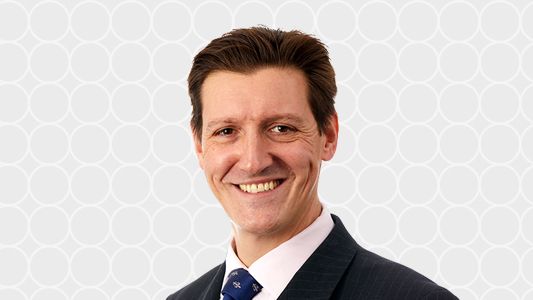
Mr Spiegelberg is a Consultant Trauma and Orthopaedic Surgeon


Areas of expertise
- Hip replacement surgery
- Hip resurfacing
- Revision hip surgery
- Knee replacements
- Partial knee replacements
- Revision knee replacements


Make an appointment
Address
-
The Lister Hospital
Chelsea Bridge Road, London, SW1W 8RH


-
Elstree Waterfront Outpatients Centre
The Waterfront Business Park, Beaufort House, Elstree Road, London, WD6 3BS
-
The Wellington Hospital
8A Wellington Place, St John's Wood, London, NW8 7JA
About Mr Ben Spiegelberg
Mr Ben Spiegelberg is a Consultant Trauma and Orthopaedic Surgeon currently practising at the Lister Hospital privately. His NHS post is with the West Hertfordshire Hospitals NHS Trust. Mr Spiegelberg specialises in the hip and knee, with particular interest in painful hip and knee joints, hip dysplasia, and revision knee replacement.
Mr Spiegelberg earned his Bachelor of Medicine and Bachelor of Surgery degrees in 2004 from St. Mary's Hospital in London. He has undergone extensive training at the Royal National Orthopaedic Hospital in Stanmore and completed his Specialist Registrar training on the Oxford registrar rotation, centred at Oxford University. Additionally, he has completed an Adult Reconstruction Fellowship in Canada.
Mr Spiegelberg is deeply involved in research, focusing on topics such as robotic knee surgery and the effects of metal wear debris. His work has been widely published in scientific journals. He has also been honoured with several awards, including the James Turner Travelling Fellowship Award and Best Poster Presentation at the European Musculo-Skeletal Oncological Society.
Mr Spiegelberg is proficient in a range of medical procedures and treatments, including minimally invasive hip surgery, knee replacement, and revision knee replacement. He is dedicated to treating conditions such as painful hip and knee joints and hip dysplasia.
Mr Spiegelberg continues to contribute significantly to the field of orthopaedic surgery through both his clinical practice and research endeavours.
Areas of expertise
- Fracture (broken bone)
- Hip and groin pain
- Hip arthroscopy
- Hip dysplasia
- Hip injections
- Hip preservation surgery
- Hip replacement surgery
- Hip resurfacing
- Hip surgery
- Joint injection
- Knee arthroscopy
- Knee ligament repair
- Knee pain
- Knee preservation surgery
- Knee replacements
- Knee surgery
- Minimally invasive hip surgery
- Partial knee replacements
- Revision hip surgery
- Revision knee replacements
- Tendon repair
- The young hip
- The young knee
Frequently asked questions
Why did you decide to become a Consultant Trauma and Orthopaedic Surgeon ?
I certainly knew from medical school that surgery was going to be my area of passion. And then throughout junior training, I realised that orthopaedics was what I was most interested in. In particular, moving on to hip and knee practice, it's such a satisfying operation. It makes such a huge difference to patients. The difference pre and post surgery from someone who's got pain with every step of movement they take, they're severely functionally limited often because of the severity of their arthritis. And then literally within a few days after the surgery, they're feeling better, their motion and their movements are better, their pain symptoms are better. And then when I see them back in clinic, that satisfaction of making a huge difference in someone's life and their quality of life just reaffirms the choice I made. It's such a satisfying job to do.
Orthopaedics also include trauma as well with patients who have had accidents, broken bones, fixing them, making them better, getting them back to their normal quality of life. Orthopaedics is a hugely satisfying speciality and I never have a day's regret making the decision to specialise in orthopaedics and particularly joint replacement surgery.
What are the common symptoms that your patients tend to present with?
In terms of hip patients, you can sometimes get a bimodal distribution. You get a younger cohort of patients with hip arthritis because they may have some childhood pathology, and older patients with wear and tear arthritis. Most patients complain of pain, often groin pain on the hip side of things. Sometimes that pain can radiate down the leg towards the knee. Often they complain of functional limitations, so stiffness starts to build up and they complain of difficulty with functional tasks such as tying shoelaces, putting shoes and socks on. And then pain when they're walking, a limp that can be getting worse. Sometimes as the arthritis progresses further, you can start to get shortening in the leg, and that can cause problems with the patient's gait as well.
In terms of knees, it's similar. It's pain predominantly, that starts to affect their quality of life and their ability to do the things that they want to do. Stiffness can start to play a part too. Sometimes with knees, you can get mechanical symptoms as well, some locking, instability type symptoms. And also swelling in the knee when that knee flares up. Arthritis symptoms can go up and down, so sometimes when they have a flare up of pain, that commonly causes quite large swelling in the knee as well.
In terms of sports injuries and knee arthroscopy, there are patients who have commonly had a trauma, perhaps they've twisted their knee, and then they are getting mechanical symptoms with their knee after that, which can be meniscal pathology that doesn't always need surgical treatment, but can do, and then repairing the meniscus or debriding it would be the treatment of choice in those patients that need surgery.
What are the treatments that you're able to offer your patients?
In terms of diagnostics, the workhorse of diagnostics is an X-ray. You can tell a lot of pathology from just a plain X-ray of the hip or the knee. It shows the bony surfaces clearly. You can also see if there's swelling in the knee, not so much in the hip joint. Looking more for soft tissue aspects of musculoskeletal injuries, then you're looking towards an MRI scan, which shows up the soft tissue aspects of the knee. That's the cartilage surfaces and what will be worn out in terms of arthritis, and also the ligamentous structures and muscular structures around the hip and knee as well.
Treatment wise, I personally try to avoid surgery for as long as possible. There are some patients where you have to go straight in for surgery, but if there's an option that I think will be successful for that patient and give them a realistic outcome that is in the realms of what they want to achieve, then non-operative treatment would be the best fit. So that can sometimes involve steroid and local anaesthetic injections, often ultrasound guided injections into the joint. I also use viscous supplementation injections, so hyaluronic acid injections as well in patients who have early or moderate arthritis and maybe younger patients where we're trying to delay the joint replacement.
In terms of surgery, joint replacement surgery, be that a hip replacement, not just a total hip replacement, but also hip resurfacing in younger patients as well, providing much better function in the hip and reduced risk of dislocation. In terms of knee replacements, not just a total knee replacement, I'm very passionate about partial knee replacements and see that in the right patient, you get a much better outcome with a partial knee replacement than you do with a total. For soft tissue injuries in a younger patient in the knee, arthroscopic surgery, either debridement to the tear if it's not repairable, but always trying to repair a tear if I think it's going to work, because maintaining that meniscus is really important in terms of reducing the risk of long term arthritis progression. The more meniscus you take out, the less shock absorber protection there is in the knee and the higher the chances that they're going to need a knee replacement later on in life.
What are your areas of sub-specialist interest?
My main passion and most of my practice is with joint replacement surgery. In terms of the hip, total hip replacements for end stage arthritis or arthritis where symptoms aren't manageable with non-operative treatment. With younger patients, hip resurfacing is an option as well, particularly now that we have the ceramic on ceramic hip resurfacing available. Ceramic on ceramic is a relatively new concept, but built on the metal on metal hips. There were lots of issues with using metal on metal in terms of complications, so ceramic on ceramic gives you all the benefits of the hip resurfacing without those negatives.
I do appropriate operations for the patient. In terms of hip replacements, there are various nuances. If a patient has a very stiff spine, we might need to use slightly different implants. I factor that in for all my patients. It's not a one operation fits all. It's personalised care for that patient, depending on their symptoms and other factors, be it spinal pathology, which might change my decision making process of exactly what implant I'm using.
With knee replacements, I don't just do total knee replacements. Partial knee replacements, I'm a firm believer that patients, if they have isolated arthritis in one of the compartments, will be better off having a partial knee replacement. I use robotics in both my NHS and private practice, particularly with knees. I think there's a real benefit with robotics in terms of much less soft tissue releases around the knee compared to a conventional knee replacement, and that translates into less post-operative pain afterwards. Patients are able to be more mobile, progressing quicker with their physio. If you're mobilising more quickly, getting out of bed and getting moving, then you're reducing risks of other complications like clots and infection.
I also use robotics for hip replacements, which gives me better accuracy in component positioning and particularly factoring in spinal pathology. The robotics allows me to assess the spine and position the implant personalised for that patient, reducing the risks of complications like dislocation and getting absolute accuracy in leg length correction and offset correction down to the nearest millimetre. It really helps in terms of getting that accuracy and component positioning, which equates to better patient outcomes in the long term.
Other specialists recommended by Mr Spiegelberg

Prof. Peter Schmid, Consultant Medical Oncologist
❝Prof. Peter Schmid is a Breast Oncologist. Provides fantastic care, well-read, knowledgeable in all areas, top-notch quality of treatment. Offers expert reassurance and expert treatment in oncological breast treatment.❞
Mr Robert Lee, Consultant Orthopaedic & Spinal Surgeon
❝Mr Robert Lee is a Spinal Surgeon. Based at The Wellington Hospital. Excellent surgeon, doesn't operate unnecessarily, high quality outcomes. Go-to spinal referral for hip-related patients who may have spine pathology.❞

Mr Simon Thompson, Orthopaedic Surgeon
❝Mr Simon Thompson is an Orthopaedic Surgeon specialising in knee ligament injuries. I am impressed with his outcomes following ACL reconstruction and refer patients who require surgical reconstruction to him. ❞


